At Hidden Hollow Farm, land stewardship is not a separate initiative. It is the foundation upon which our livestock and genetics are built. We believe that healthy cattle require healthy soil, pristine water resources, and responsibly managed ecosystems.
The Physical Texture of the Farm
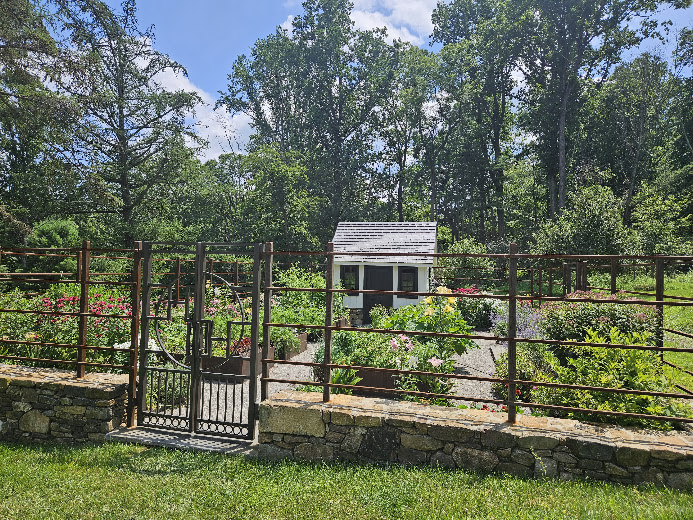
The physical landscape of the farm is defined by hand built stone walls constructed from rocks cleared from pastures over generations. These stone borders outline rolling pastures, hay fields, and dense hardwood forests comprising native maples, oaks, tulip poplars, black walnuts, hazelnut, and ironwood trees. With two natural mountain streams, freshwater ponds, and protected wetland habitats, the farm provides a rich, balanced ecosystem for native wildlife.
Living Monuments: Our Landmark Trees
Trees hold a central place in the farm’s identity, serving as living historic monuments across the landscape:
- The Ancient Butternut Tree: A hollow butternut tree, recognized by arborists as one of the largest surviving specimens in New Jersey, stands as a testament to natural resilience.
- The Southern Pecan Tree: According to the oral history of the farm, this magnificent pecan tree was planted by a returning Civil War soldier in the 19th century and is one of the largest in the state.
- The Surviving Double-Trunk Ash Tree: Standing isolated in the center of our primary hay field, this majestic double-trunk ash tree has remarkably survived the Emerald Ash Borer blight that claimed millions of ash trees across North America. Through careful treatment, isolation, and attentive care, this tree stands as a living symbol of conservation, strength, and endurance.
“The surviving ash tree in our main hay field represents our core philosophy. Through patience, protection, and care, we preserve what is strong, quiet, and enduring for future generations.”
— Kathleen Enz Finken
Conservation Practices and Grazing Management
Our daily farming operations follow conservation practices designed to enrich the land for future decades. We utilize rotational grazing systems that allow pasture grasses to recover naturally, building root depth, improving water retention, and preventing soil erosion. Each wooded tract is governed by a Forest Stewardship plan. Responsible forestry practices protect our hardwood tracts, while stream buffers preserve water quality across our watersheds.
By integrating environmental care into our daily breeding and cattle development routines, we ensure that every Red Angus heifer raised at Hidden Hollow Farm develops structural soundness, natural hardiness, and efficient foraging capability on healthy, pasture-based land.