
The Anatomy of a Surviving Ash Tree: Resilience and Stewardship at Hidden Hollow Farm
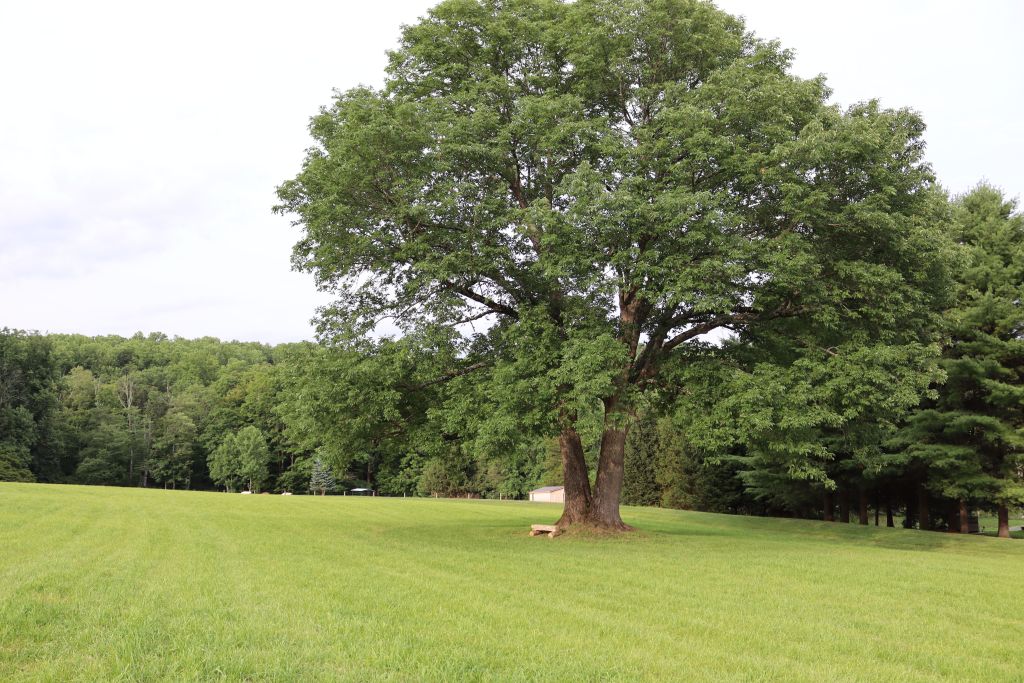
How an ancient 2 trunk white ash survived a continent wide pest infestation and became a living symbol of patient land management in Washington, New Jersey.
The surviving 2 trunk white ash tree at Hidden Hollow Farm in Washington, New Jersey stands as a rare survivor of the Emerald Ash Borer infestation that destroyed over 99% of ash trees across North America. Its survival is attributed to a combination of exceptional root depth, undisturbed soil biology, and natural genetic vigor with minimal soil compaction around its canopy.
For Hidden Hollow Farm, this landmark tree is more than a botanical anomaly. It represents a continuous line of stewardship connecting 1790 land records, Lenape indigenous care, 19th century stone architecture, and modern registered Red Angus cattle breeding. The resilience of the tree directly reflects the farm philosophy: true value comes from patient, disciplined management rather than short term commercial exploitation.
Why Did This Ash Tree Survive the Emerald Ash Borer?
Across the eastern forest canopy of North America, the arrival of the Emerald Ash Borer caused unparalleled ecological destruction. First identified in Michigan in 2002, this invasive beetle spread rapidly across 36 states, killing hundreds of millions of ash trees. In many woodlots across New Jersey, mortality reached 100%, leaving behind vast stands of timber skeletons. Entire native forest habitats were transformed within a single decade as mature Fraxinus americana specimens vanished from the countryside.
Standing in the main hay field at Hidden Hollow Farm in Washington, New Jersey, a remarkable 2 trunk white ash continues to leaf out every spring. While nearby timber stands succumbed to larval feeding beneath the bark, this legacy specimen maintained vigorous sap movement and a full leafy crown. Arborists and forest historians recognize that surviving specimens in untreated rural environments are extraordinarily rare, representing less than 1 in 1000 trees.
Biological research indicates that trees surviving intense regional pressure possess unique combinations of vascular health, phenolic chemical defenses, and structural vitality. At Hidden Hollow Farm, the tree sits in deep, well drained glacial till soil. Because the root architecture was never damaged by heavy tillage equipment or severe chemical treatments, the root system maintained deep water access during summer drought cycles, providing the metabolic energy needed to mount natural immune defenses against insect boring. The tree has been treated and fertilized in recent years to further protect it from disease as ash trees all over the country began to die off. Its location, isolated in the middle of a large hay field away from the forested acreage, further protects it from assault from the Emerald Ash Borer beetle.
How Does an Historic Tree Represent Farm Stewardship?
Land stewardship at Hidden Hollow Farm is measured across centuries rather than fiscal quarters. The homestead land records date back to 1790, when early settlers established property boundaries in a region inhabited by the Lenape indigenous tribal groups. Throughout the 19th century, farmers built stone farmhouses, timber barns, and a 1 room stone schoolhouse, the foundation of which is preserved on the farm in a parklike setting. Each generation left a visible mark on the landscape.
In the mid 20th century, Kathleen Enz Finken’s parents purchased the farm property. Her father, who served as a local school principal, managed the land with deep respect for natural systems while raising beef cattle. Kathleen and her 5 siblings spent their youth picking stones from the pastures, maintaining timber fences, and learning that healthy livestock depend directly on healthy soil. When Kathleen and her husband Gerald, together with Jonathan, rebuilt the farm infrastructure between 2018 and 2024, preserving mature native trees was considered an operational priority.
The surviving ash tree stands at the center of this historical continuity. In 2006, the farm was formally entered into the New Jersey Farmland Preservation program, ensuring that its 80 plus acres will remain protected from commercial development forever. The forested acreage at Hidden Hollow is governed by formal Forest Management plans to ensure the ongoing health of the trees and the ecosystems of the land. The gentle balance of livestock agriculture, with land and forest conservation practices allows for healthy pastures, healthy trees, and a positive overall impact on the environment.
How Can Landowners Protect Legacy Trees on Working Farms?
Protecting historic timber and native tree canopy on active agricultural land requires intentional daily choices. Working farms often face operational pressures to clear field edges, expand tilled acreage, or remove mature trees that disrupt large machinery routes. At Hidden Hollow Farm, conservation is integrated directly into daily farm work through active forest monitoring, invasive species management, and rotational pasture resting.
Landowners seeking to safeguard legacy trees on working pastureland can implement 4 key management practices:
- Establish Protected Root Zones: Keep heavy farm machinery, manure storage, and concentrated feeding areas outside the drip line of mature hardwood trees to prevent root compaction and bark trauma.
- Implement Rotational Grazing: Rotate cattle through pasture paddocks every few days to allow grass roots to recover, prevent soil erosion, and maintain organic matter levels around tree canopy perimeters.
- Monitor Timber Health Continuously: Inspect high value native species like white ash, white oak, butternut, walnut, and maple regularly for signs of pest activity, canopy thinning, or fungal stress.
- Balance Forest and Pasture Boundaries: Maintain transitional brush buffers along field edges to harbor beneficial predatory insects, songbirds, and native pollinators that support natural pest suppression.
Preserving Native Heritage for Future Generations
In addition to the surviving ash, Hidden Hollow Farm shelters several historic landmark trees that tell the story of North American land culture. A massive Butternut (White Walnut) tree continues to bear nuts despite that it’s hollow from top to bottom. Nearby, a grand Southern Pecan tree rumored to have been planted by a Civil War soldier returning from campaigns in the South in the later 1800s stands as a living historical monument. These living artifacts serve as constant reminders that farming is a temporary trust granted to each generation.
When visitors, cattle buyers, and community members visit the farm in Washington, New Jersey, they encounter a landscape where history, conservation, and elite livestock production work in harmony. The 2 trunk ash tree in the main hay field remains a beacon of quiet endurance. It proves that when land is managed with care, discipline, and respect, both the soil and the legacy built upon it will stand strong for centuries to come.